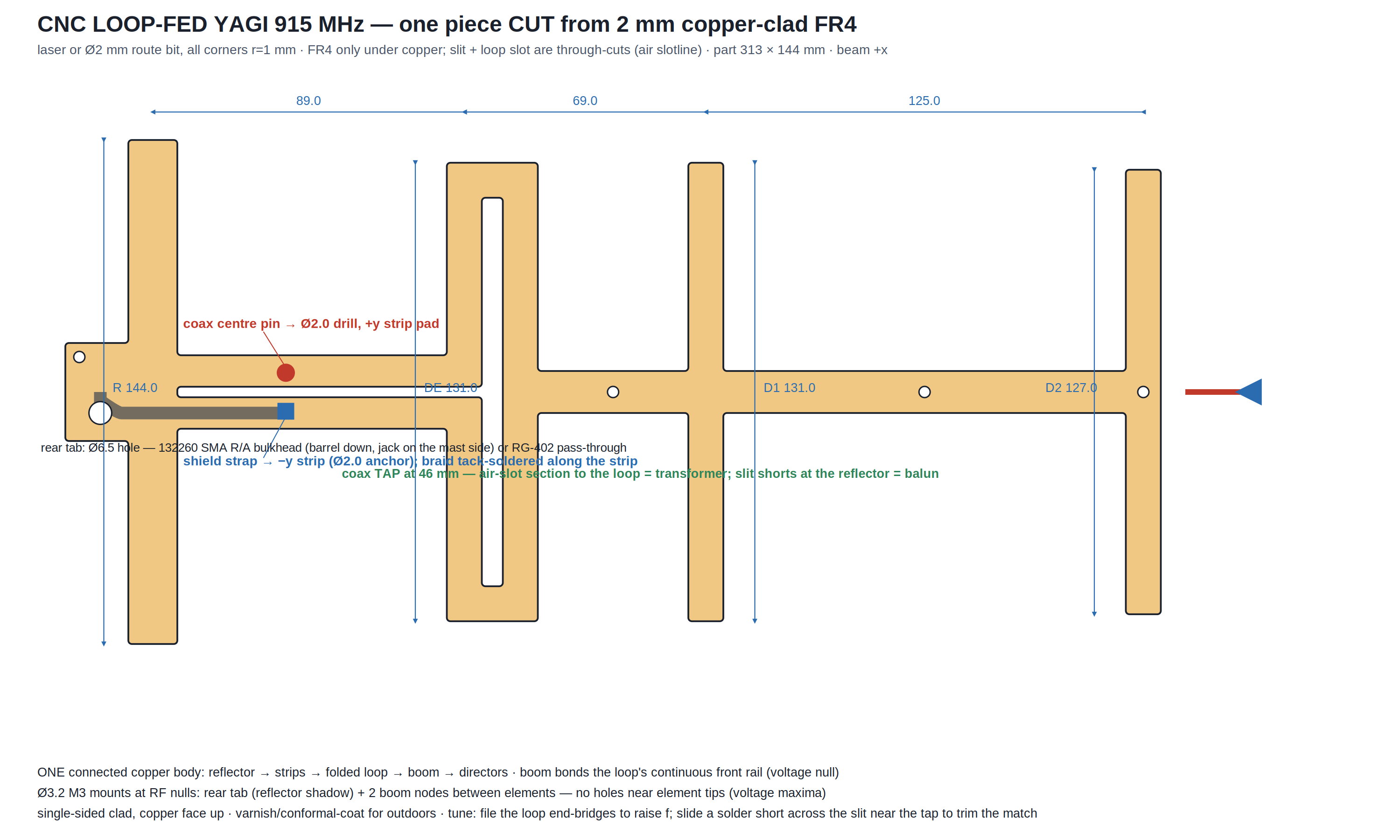
4-element loop-fed Yagi, THIN elements — the high-gain corner
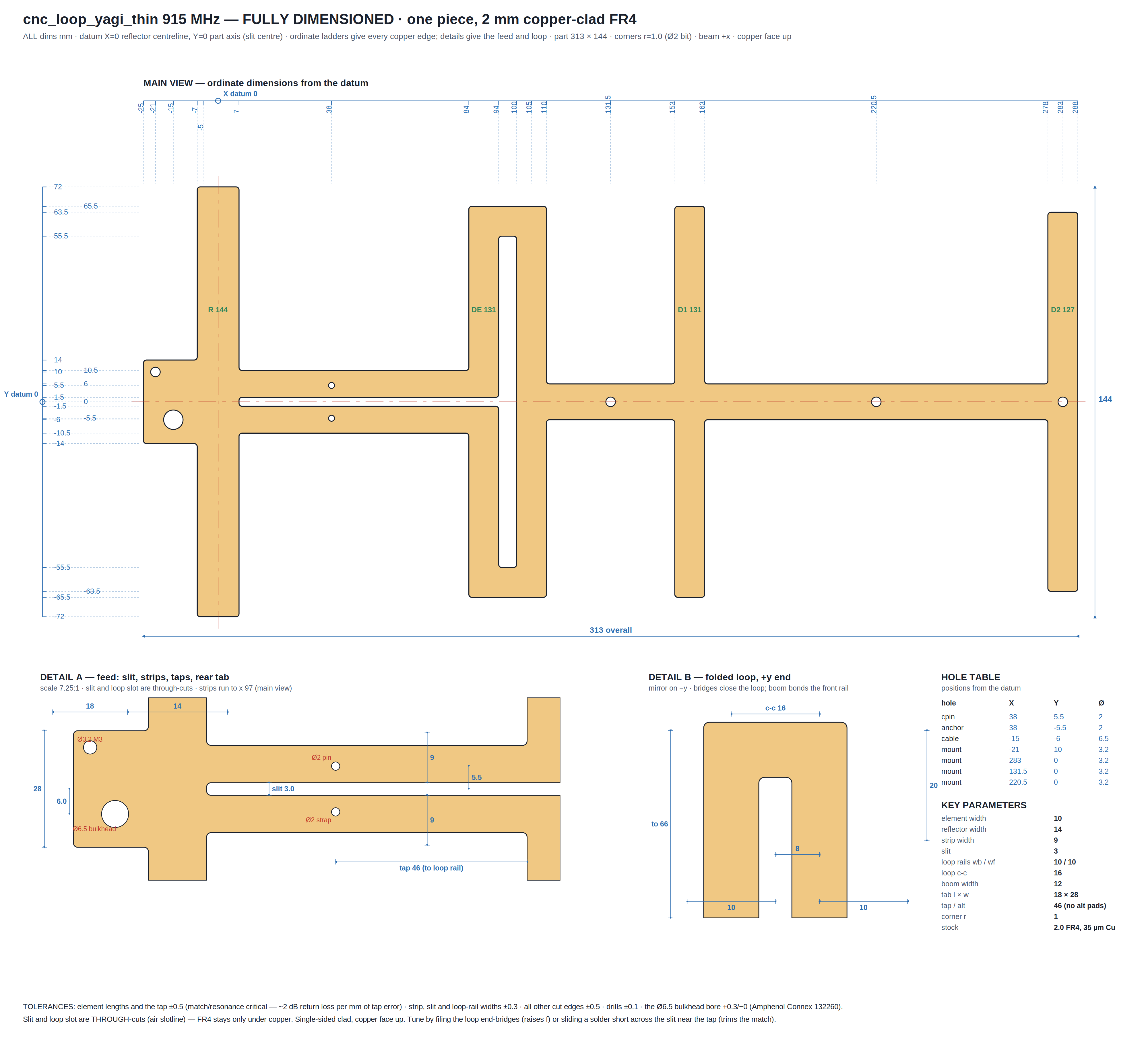
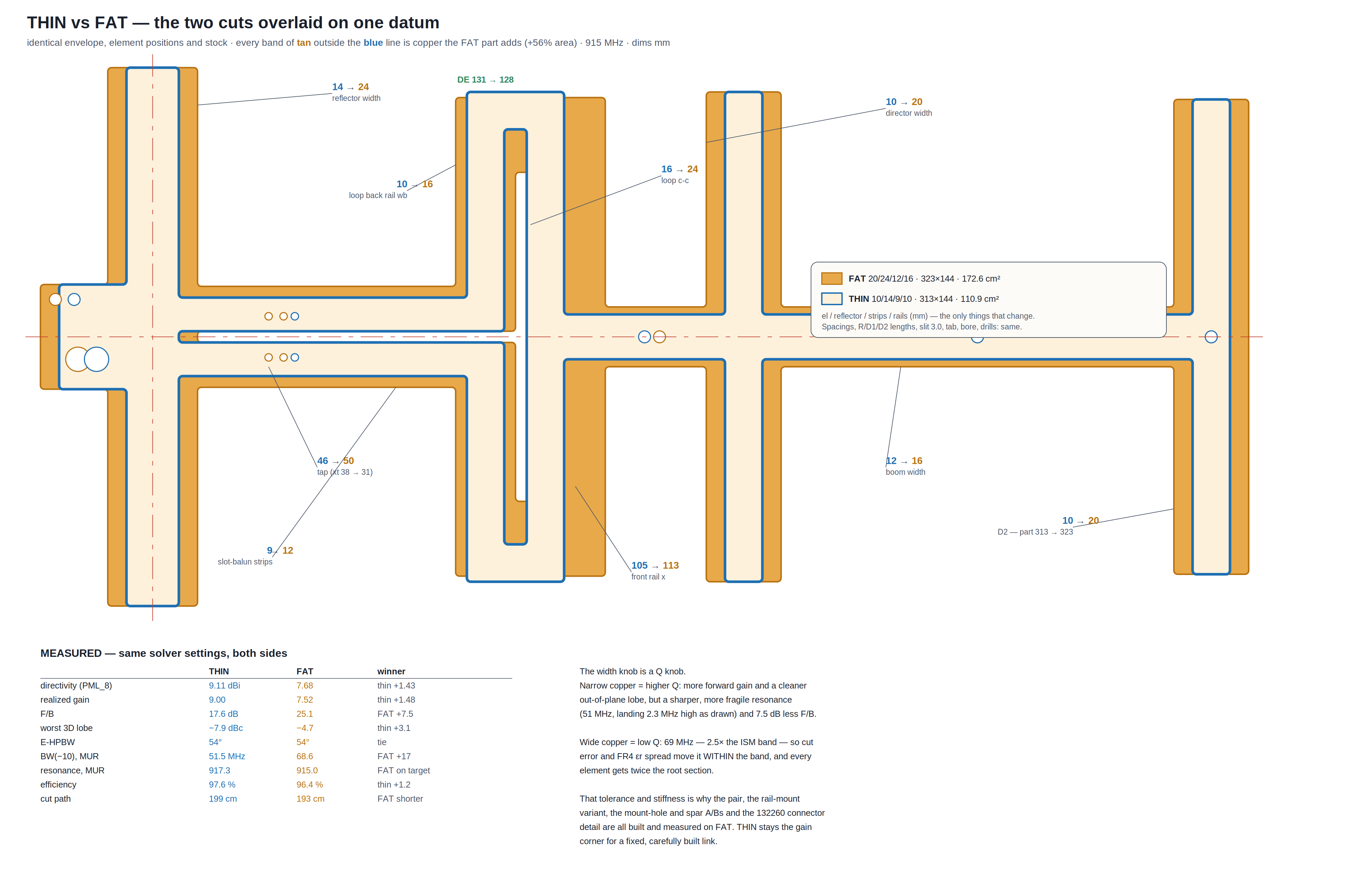
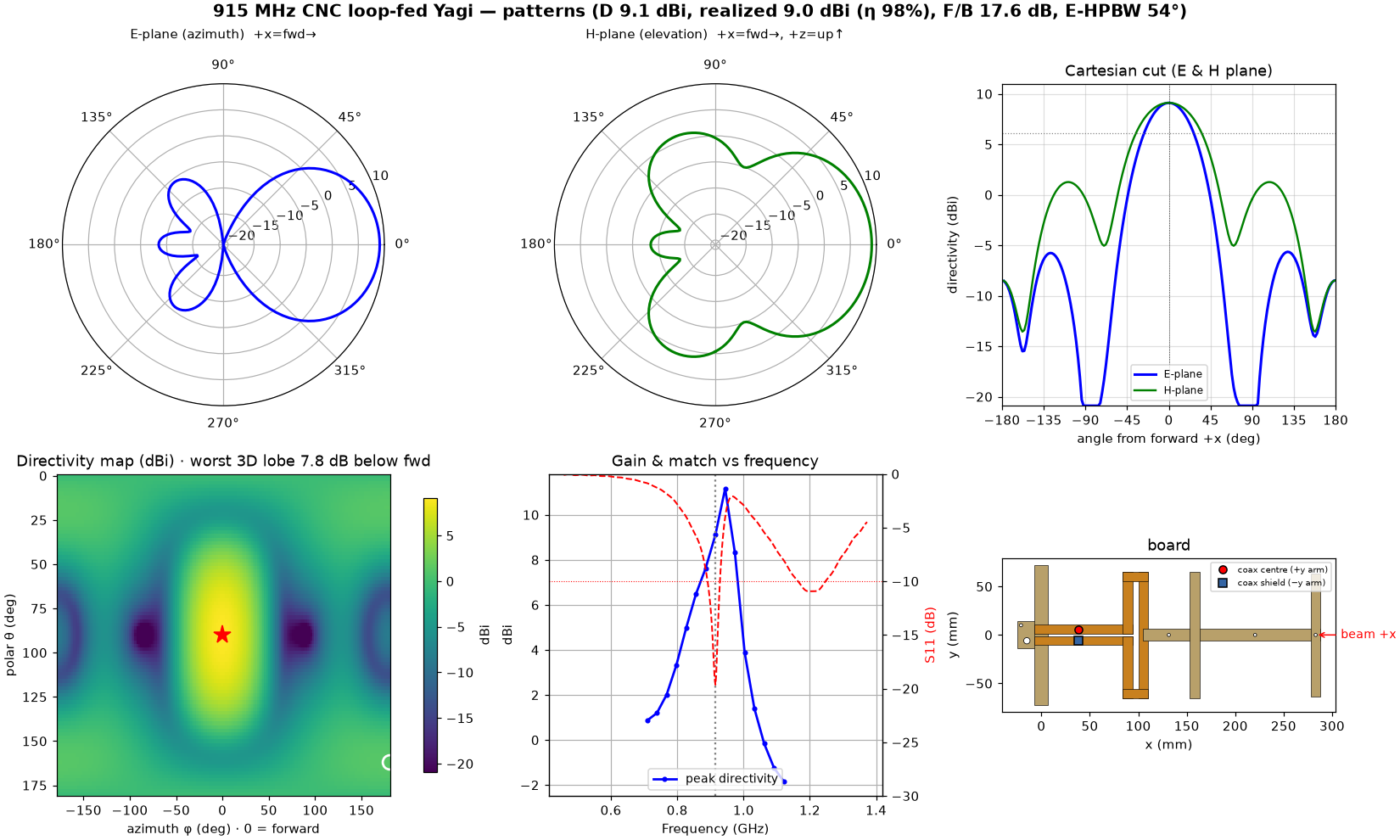
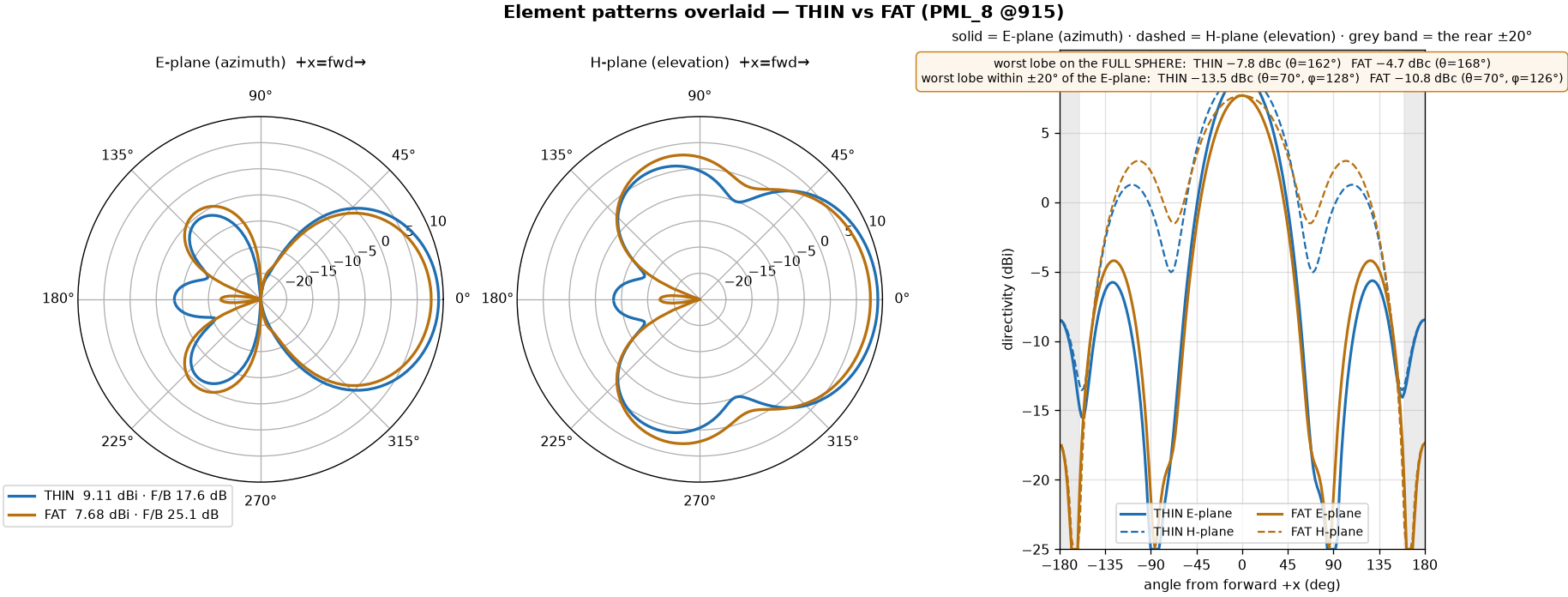
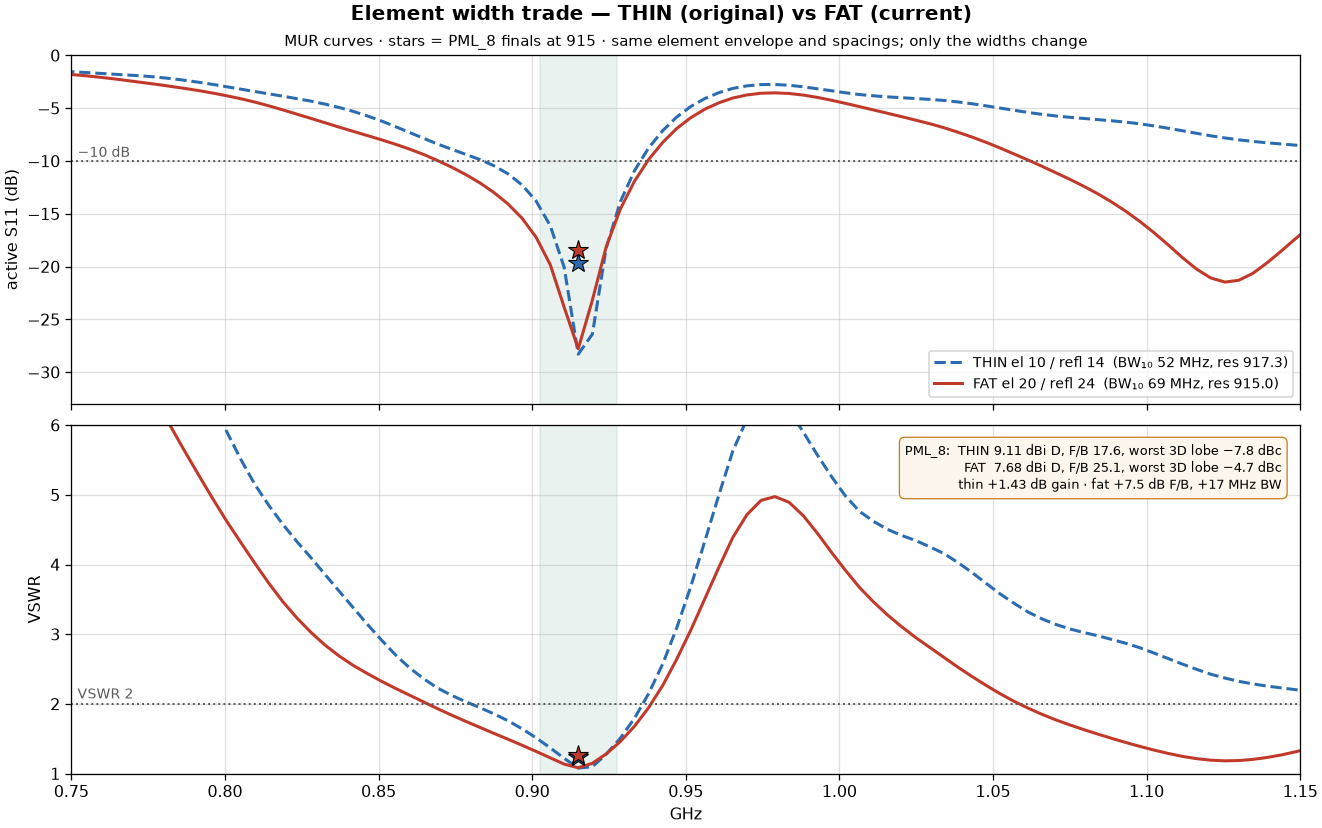
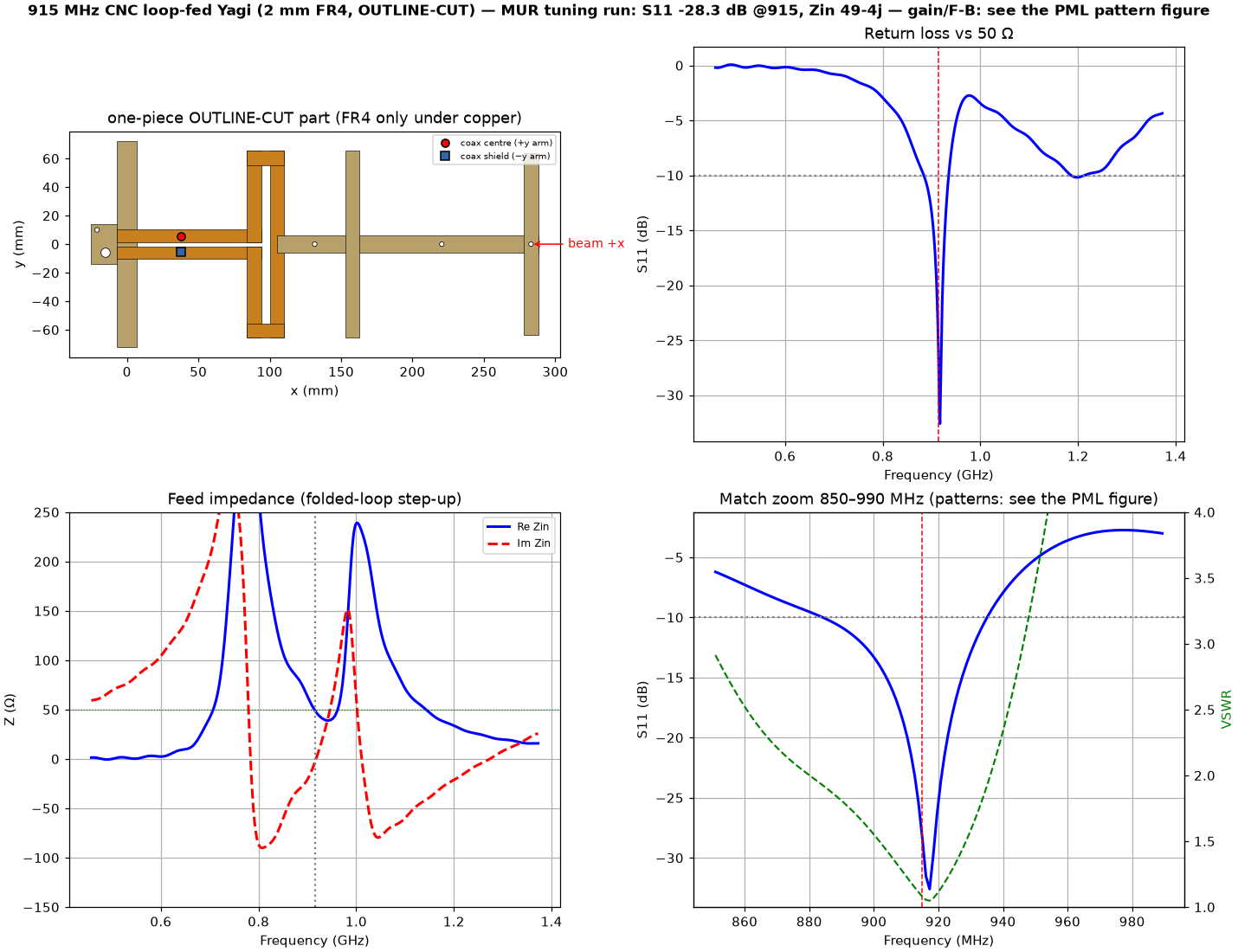
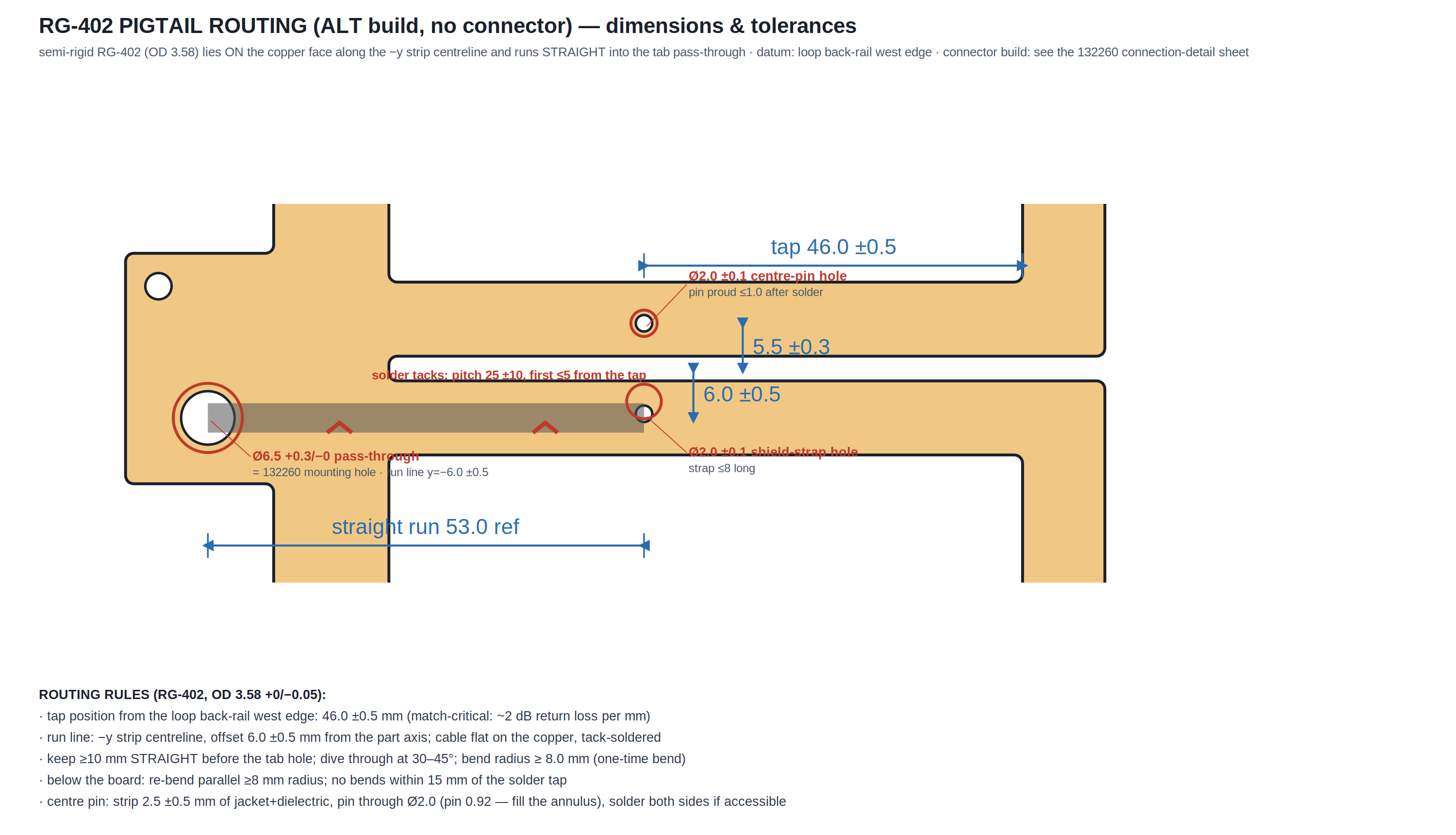
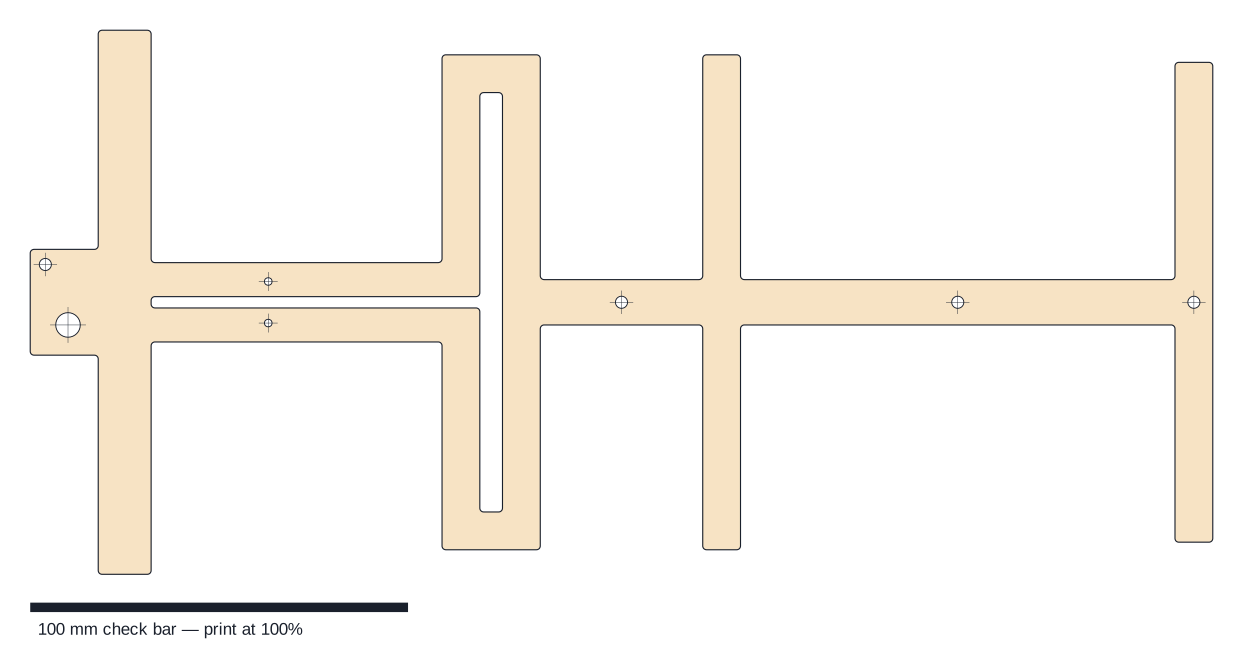
THIN element (el 10 / rails 10 / reflector 14 / boom 12 mm — the original narrow cut, kept as the gain corner of the same design): 9.1 dBi D (PML_8) · 9.0 dBi realized (η 97.6%) · F/B 17.6 dB · E-HPBW 54° · worst 3D lobe −7.9 dBc (down-back θ=162°) · worst lobe within ±20° of the E-plane −13.5 dBc (θ=70°, φ=128°) — 2.7 dB more horizon-slab headroom than the FAT's −10.8, the same direction the full-sphere figure points · S11 −19.6 dB @915 PML (−28.3 MUR) · Zin 42−j5 · res 917.3 MUR (2.3 MHz high as drawn) · BW(−10) 51.5 MHz · SAME part, same envelope and spacings as the FAT headline — only the widths change, and the trade is two-sided: thin buys +1.43 dB directivity and a 3.1 dB quieter worst 3D lobe; FAT buys +7.5 dB F/B, +17 MHz bandwidth (69 vs 51.5) and lands on 915.0 exactly · that bandwidth is the tolerance margin: a mm of cut error or an FR4 εr surprise moves the low-Q FAT part WITHIN the ISM band and walks the high-Q thin one out · thin is also the floppier part (half the root section on every element) and has no alt tap pads and no rail variant — the pair, rail-mount, mount-hole/spar A/Bs and the 132260 connector detail are all measured on FAT · pick thin for a fixed, carefully built single-frequency link where 1.4 dB of range matters and elevation lobes bother you · 313×144 mm (110.9 cm² copper vs the FAT's 172.6 — but a LONGER cut path, 199 vs 193 cm, so machining time is a wash) · same Ø2-bit tooling, same Ø6.5 rear-tab bulkhead bore (Amphenol Connex 132260) and the same feed detail
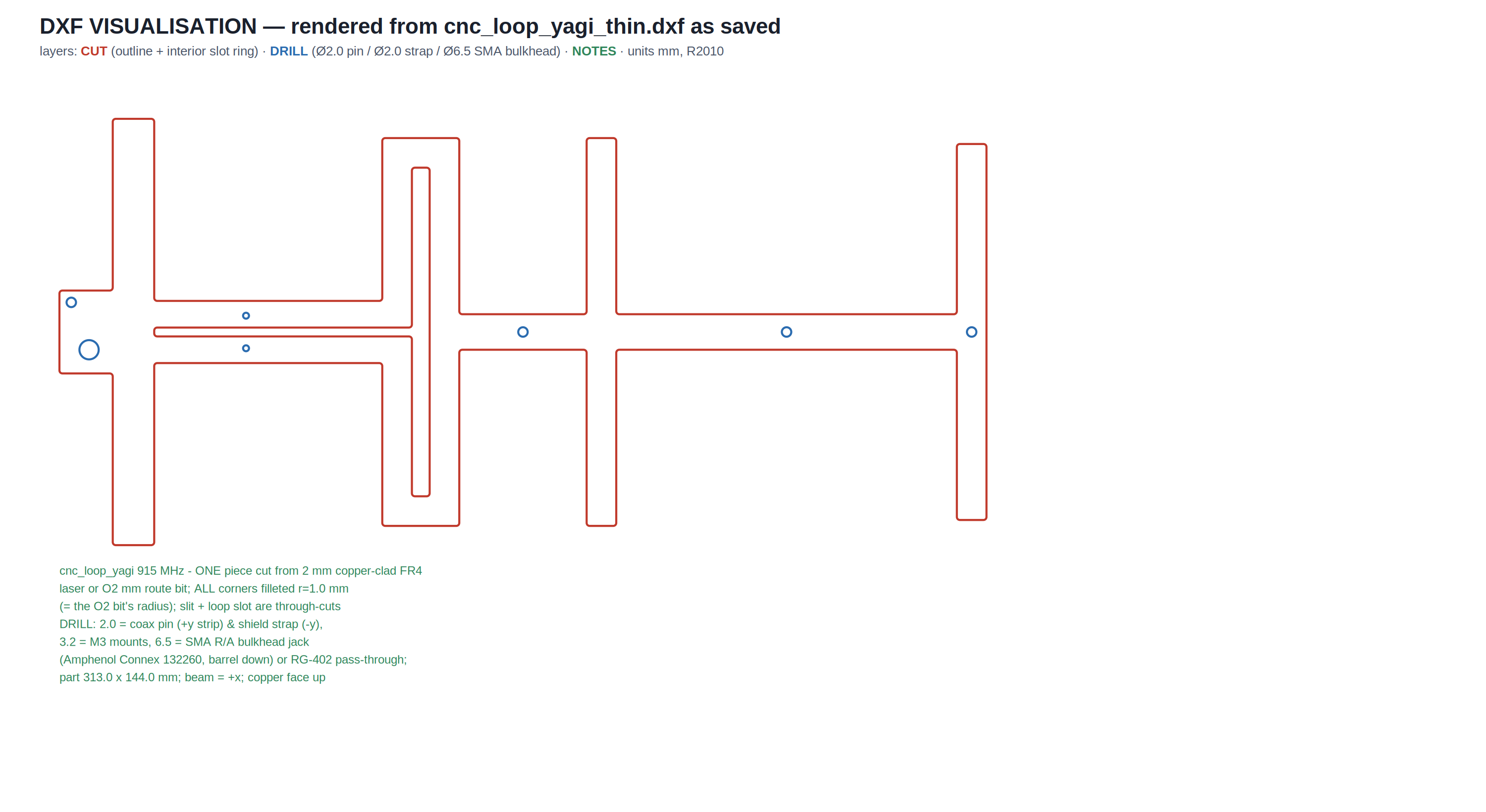
⬗ stack-up: copper-clad FR4 2.0 mm · THIN elements (original narrow cut) · part CUT to the copper outline (laser or Ø2 mm route bit, corners r=1, drills Ø≥2) · FR4 only under copper · feed: Amphenol Connex 132260 SMA R/A bulkhead + RG-400 jumper (or bare RG-402 pigtail)
In the monopulse pair — measured, and it buys almost nothing
Cut into the Σ/Δ pair and solved at PML_8, 240 mm (0.73λ), shared-reflector link, identical settings to the FAT pair. Only +0.64 dB of the element's +1.43 dB survives the array (Σ 11.12 vs 10.48 dBi); monopulse sensitivity ties (Δ/Σ ratio slope 2.80 vs 2.69 dB/°); the Δ null is 62.8 dB, marginally deeper than the FAT pair's 59.2; and DF resolution ties at 11.4 vs 11.7° (−5 dB background) inside the engine's ~0.24° Monte-Carlo floor. An earlier version of this section reported a shallow 43.8 dB null and a −1.13 dB boresight imbalance for this pair — that was a non-mirror-symmetric FDTD y-mesh, not the antenna, and is fixed; see the cnc_loop_mp_thin card for the mechanism. What the narrow element really costs in the pair is F/B (9.2 vs 13.8 dB) and bandwidth; what it buys is 0.6 dB of Σ gain and no bearing performance. FAT stays the pair's element.